The Organic Farmer Holding Plant: A Versatile Art Set for Creators and Small Businesses
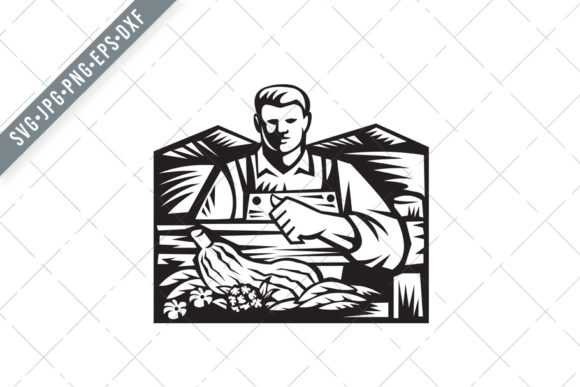
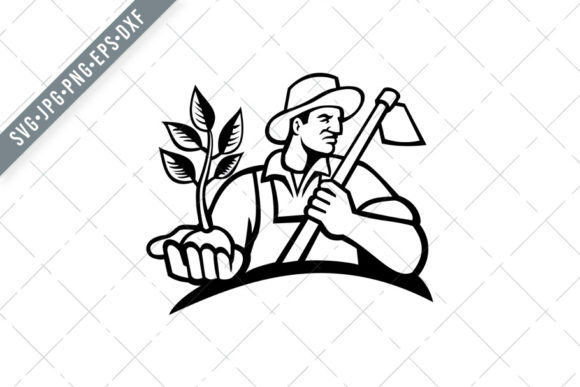
If you have ever searched for distinctive, retro-style graphics for a craft or branding project, you have likely come across the Organic Farmer Holding Plant illustration set. This collection features a black-and-white, vintage-inspired drawing of a farmer in a hat, cradling a plant in one palm while resting a grab hoe on his shoulder, all set against an isolated background. The download typically includes SVG, PNG, DXF, EPS, and JPG files, along with a 300 dpi PNG large enough for most print applications. Many people are drawn to this set for creating T-shirts, mugs, stencils, wall art, greeting cards, invitations, and even scrapbooking or pattern design. However, despite its apparent simplicity, there are several common mistakes that can turn a promising project into a frustrating experience. Understanding these pitfalls and how to avoid them will save you time, money, and effort.
What Exactly Is the Organic Farmer Holding Plant Set?
At its core, this is a vector and raster graphic package built around a single character illustration. The retro style—often reminiscent of mid-century print or farm-themed ephemera—gives it a nostalgic, approachable feel. Because the files come in multiple formats, the set is meant to work across different tools: SVG and DXF for cutting machines like Silhouette Cameo and Cricut, EPS for professional vector editing, and PNG/JPG for immediate use in digital or low-resolution print projects. The appeal lies in its versatility: a single image can be adapted for screen printing, laser engraving, sublimation, or simple home crafting. But that versatility also leads to confusion about which file to use when.
Mistake 1: Using the Wrong File Format for Your Project
The most frequent error people make is grabbing the first file they see without understanding format differences. A beginner might download the PNG file for a Cricut cut, only to find the machine cannot separate the design into cut lines. Or someone might try to open the SVG in an older version of Microsoft Word and wonder why the image appears broken. These mismatches waste time and can ruin materials like vinyl or heat transfer paper.
How to avoid this: Before you start, know the capabilities of your software and hardware. For cutting machines, SVG and DXF are ideal because they preserve vector paths. Silhouette Studio and Cricut Design Space handle SVG well, but some older Cricut models prefer DXF. For screen printing or sublimation, use the EPS file with Adobe Illustrator or CorelDRAW to keep sharp edges. The PNG at 300 dpi is perfect for print-on-demand mockups or non-vector projects like digital scrapbooking. Take a moment to label your download folders by intended use, so you are not guessing later.
Mistake 2: Overlooking the Importance of Scale and Resolution
Another oversight is assuming the PNG file is ready for any size without checking its dimensions. The set advertises a PNG that is at least 10 inches at 300 dpi, which is fine for small to medium prints. But if you try to enlarge that PNG to poster size, you will see pixelation and blurry edges. Similarly, the SVG and EPS files are infinitely scalable in theory, but only if your software imports them correctly. Some free or basic programs rasterize vector files on import, which defeats the purpose.
Better approach: Always test the design at your target output size before committing to a batch. If you are printing a 16-inch T-shirt design, open the SVG in a vector editor and scale it proportionally. Export a new PNG at the required dimensions and DPI for your printer. For large items like banners, stick with the vector formats and export at the final size. This simple step prevents fuzzy prints and wasted materials.
Mistake 3: Ignoring the Retro Style When Applying to Modern Projects
The Organic Farmer Holding Plant illustration has a distinct vintage aesthetic—bold lines, limited shading, and an old-fashioned silhouette. Some users slap this design onto bright neon backgrounds or combine it with ultra-modern fonts, creating a visual clash that looks unintentional. The mistake is treating it like any generic clip art rather than honoring its nostalgic character. This can weaken the impact of a brand logo, wedding invitation, or product label.
How to blend old and new effectively: Let the retro style guide your color palette and typography. Pair the farmer with muted earth tones, cream, ochre, or forest green. Hand-drawn or serif fonts often complement the illustration better than stark sans-serif styles. For a clean modern twist, isolate the line art on a white background and use a single accent color. If you are designing for a business that wants a farm-to-table or organic feel, this illustration can convey authenticity—but only if the surrounding elements support that message. Test a few mockups before finalizing your design.
Mistake 4: Neglecting Licensing and Commercial Use
Many small business owners and entrepreneurs buy this set assuming they can use it for unlimited commercial projects without restrictions. However, some graphic sets come with licenses that limit the number of products you can sell, the platforms you can use, or the way you must attribute the artist. In the worst case, using an unlicensed design on merchandise could lead to a takedown notice or legal fees.
What to check before using: Read the product description or license file included in the zip download. Most sets for this type of artwork allow personal use and small-scale commercial use (e.g., up to 500 units). If you plan to sell thousands of T-shirts or use the image as a core brand logo, you may need an extended license. Keep a record of your purchase and the license terms. This is especially important if you buy from marketplaces that host multiple artists with different rules. When in doubt, contact the seller directly.
Mistake 5: Skipping Pre-Modification Checks on the Vector Files
When you open the SVG or DXF for the first time, you may notice extra anchor points, open paths, or overlapping lines that are not visible in the preview. This is common in illustrations that were manually traced or converted. Attempting to cut or print without cleaning up the file can result in jagged edges, incomplete cuts, or unexpected fills.
Practical advice: After unzipping the download, open the SVG in your vector editing software (Inkscape is free and capable). Zoom in on the farmer’s hand, the plant, and the hoe. Check for stray points and merge overlapping shapes. If you are using a cutting machine, run a test cut on scrap material before loading your final vinyl or cardstock. A few minutes of cleanup can prevent hours of rework.
Mistake 6: Assuming One File Fits All Software
Beginners often expect that the PNG file will work everywhere, and they ignore the other formats. While PNG is the most universally compatible, it lacks transparency in some programs or may appear with a white background if not handled correctly. The DXF file, on the other hand, may open perfectly in Silhouette Studio but show garbled or missing elements in other programs. This confusion leads to frustration and the mistaken belief that the set is defective.
Solution: Keep a reference note for each format: SVG for editing and cutting (most Cricut and Silhouette users), DXF for older or specific machines, EPS for professional vector work, JPG for quick previews, and PNG for ready-to-print digital use. If you are a beginner, start with the SVG for cutting and the PNG for printing. As you gain experience, explore the other files to unlock their advantages.
Mistake 7: Rushing the Download and Organization Process
After purchasing the set, many people click the download link, extract the zip to a messy folder, and lose track of which file is which. Later, they cannot find the correct format, so they use a lower-quality JPG instead of the SVG. This degrades the final product.
A better system: Create a dedicated folder on your computer named “Organic Farmer Set” or something similar. Inside, make subfolders for “Vector,” “Raster,” and “Cutter Files.” Rename each file with a clear label, such as “Organic_Farmer_SVG_cut” and “Organic_Farmer_PNG_300dpi.” This simple organization saves time on every future project and reduces the chance of using the wrong file type.
What to Check Before You Buy or Download
Before purchasing any similar set, take a close look at the preview images. Are they showing the exact files you will receive, or are they mockups of final projects? Verify that the SVG is truly vector and not a raster image saved with an SVG extension. Check user reviews for comments about file quality, cut performance, and compatibility with common machines. If the seller offers sample downloads or a preview, test those first. Also, confirm the included commercial license details—some sellers list them in the product description, while others require reading a separate policy page.
For the Organic Farmer Holding Plant set specifically, ensure the PNG is indeed at least 10 inches at 300 dpi. A smaller PNG can be scaled down but not up without quality loss. If you plan to use the design for large banners or signage, confirm that the vector files are properly grouped and layered. A well-structured SVG will have the farmer, plant, and hoe as separate elements, making it easier to recolor or reposition parts of the composition.
Applying the Design with Confidence
Once you have the right file and understand its limitations, the possibilities are genuinely broad. You can use the illustration for:
- Custom T-shirts for a farmer’s market vendor or organic produce business
- Mugs and drinkware using sublimation or vinyl decals
- Greeting cards with a rustic, heartfelt theme
- Stencils for wall art, garden signs, or event decorations
- Scrapbooking layouts that celebrate nature or heritage
- Pattern design for fabrics, wrapping paper, or digital backgrounds
- Party invitations for farm-themed birthdays or baby showers
Each medium may require slight adjustments. For fabric printing, consider mirroring the image if using heat transfer. For glass or ceramic, test adhesion with a small decal first. And for any multi-layer project, verify that each layer of the SVG or DXF is assigned a correct color or action (e.g., cut, score, print).
Final Practical Tips
No matter your skill level, approach each project with the expectation of a small test run. Print one mug, cut one sticker, or sew one onesie before producing in bulk. Check that the retro style matches your audience’s expectations—farm imagery resonates strongly with people who value sustainability, organic food, and traditional craftsmanship. If you are marketing to a younger demographic, consider combining the illustration with bold typography or a modern layout to bridge the old and new.
Also, do not be afraid to customize the design. The black-and-white format is perfect for adding your brand color, swapping the plant for a crop that aligns with your product, or adjusting the farmer’s posture to fit a specific composition. Vector files give you full control—use it. Just remember to save a backup of the original files before editing, in case you need to start over.
The Organic Farmer Holding Plant set is a valuable resource when used with intention. By understanding file formats, respecting the retro style, checking licensing, and preparing your software, you can avoid the common missteps that lead to wasted time and materials. Treat each download as a tool, not a finished solution, and you will produce work that feels both professional and personal.