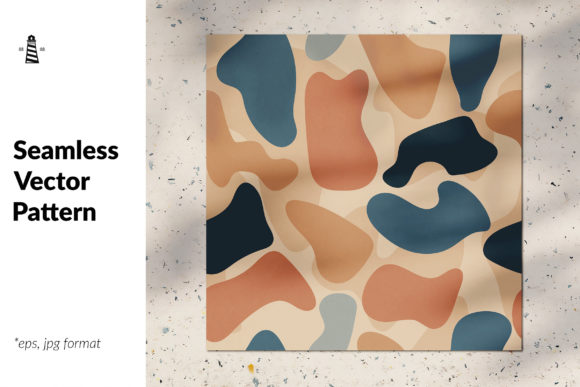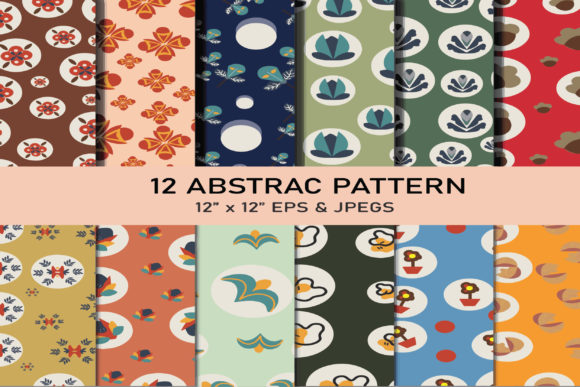
Abstrac Seamless Pattern for Digital Design and Craft Projects
When planning a creative project, the choice of surface design plays a considerable role in the overall outcome. An Abstrac Seamless Pattern offers a versatile and practical solution for a wide range of digital and physical applications. Rather than serving as a standalone decorative piece, this type of pattern functions as a repeatable, print-ready resource that can be adapted across multiple formats. Understanding what these files contain, how they work, and where they deliver the most value can help you determine whether they align with your specific creative needs.
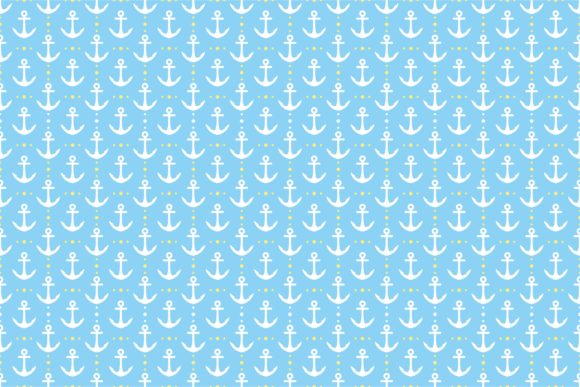
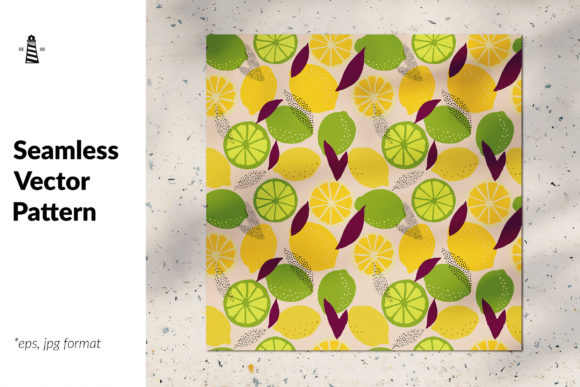
An Abstrac Seamless Pattern is a digital design file where the elements repeat uniformly across a surface without visible seams or interruptions. The term "abstrac" here refers to abstract, non-representational motifs that rely on shapes, lines, colors, and textures rather than literal imagery. These patterns are typically offered as a set of coordinated files, often including both raster (JPG) and vector (EPS) formats. In a standard package, you might receive 12 JPG files at 12 by 12 inches with a resolution of 300 ppi, along with 12 corresponding EPS files. These are digital products only; no physical items are shipped. The files are designed to be downloaded and used in your own projects, whether for personal or commercial purposes, depending on the license terms provided by the seller.
What the File Set Includes and How It Works
The typical file set for an Abstrac Seamless Pattern collection includes two primary formats, each serving a distinct purpose. The 12 JPG files are raster images, meaning they are composed of pixels. At 12 by 12 inches and 300 ppi, each file offers sufficient resolution for high-quality printing at that size or smaller. The 12 EPS files are vector-based, which means they are composed of mathematical paths. Vector files can be scaled up or down without losing quality, making them suitable for larger formats or situations where you need to edit individual elements within the pattern.
Having both formats gives you flexibility. You can use the JPG files directly for standard printing tasks, such as gift wrapping, scrapbooking, or packaging, where the fixed resolution is adequate. The EPS files allow you to open the pattern in vector editing software, adjust colors, resize the pattern for larger surfaces, or extract specific motifs for other uses. This dual-format approach addresses a common tradeoff: raster files are easy to use immediately, while vector files provide long-term adaptability. The tradeoff is that EPS files require compatible software, such as Adobe Illustrator or CorelDRAW, and some familiarity with vector editing. If you do not have access to such tools, the JPG files will still serve most straightforward printing and digital design needs.
Reasons to Consider an Abstrac Seamless Pattern
People researching abstract seamless patterns often have specific project requirements in mind. One common scenario is the need for a cohesive, repeatable design that can be applied across multiple items without visual breaks. For example, if you are designing a set of coordinated gift wraps, digital papers, or packaging materials, a seamless pattern ensures that the design flows continuously from one sheet to the next. This is especially important for wrapping paper where seams or mismatches can detract from the finished look.
Another reason is the abstract nature of the design. Abstract patterns tend to be more forgiving than figurative or representational patterns. Because they rely on shapes and color relationships rather than recognizable objects, they can work well in contexts where the design should not compete with other visual elements. For instance, in scrapbooking, an abstract pattern can serve as a background that supports photographs and embellishments without overwhelming them.
The digital format also offers convenience. You do not need to store physical rolls of wrapping paper or sheets of scrapbook paper. Instead, you can print exactly the amount you need, at the size you need, whenever a project arises. This reduces waste and allows for on-demand customization. For small businesses or independent creators, this can be a practical advantage over buying pre-printed materials in bulk.
Benefits, Tradeoffs, and Practical Considerations
One clear benefit of using an Abstrac Seamless Pattern set is the consistency across files. The 12 JPG and 12 EPS files are usually designed as a coordinated collection, meaning they share a similar color palette, motif style, or theme. This makes it easier to create a unified look across multiple projects without spending time manually matching colors or repeating elements. For a packaging line, for example, you could use different patterns from the same set for different product variants while maintaining brand coherence.
Another benefit is the resolution. At 300 ppi, the JPG files are print-ready for most home and commercial printers when used at or below 12 by 12 inches. If you need to print larger, the EPS files can be scaled without pixelation. This scalability is a key tradeoff to evaluate: if you anticipate needing large-format prints, such as posters or banners, the vector files become essential. If your projects are consistently small to medium, the JPG files alone may be sufficient.
There are also tradeoffs to consider. First, abstract patterns may not suit every aesthetic or project. If your design brief calls for specific imagery, such as florals, animals, or geometric precision, an abstract pattern might feel too loose or ambiguous. Second, the 12-by-12-inch size, while common and convenient, may require tiling for larger surfaces, which can introduce visible seams if not handled carefully. Third, because this is a digital product, you are responsible for printing or rendering the files. Print quality depends on your printer, paper, and settings, not just the file resolution.
Expectations should also be realistic regarding color accuracy. The pattern you see on your screen may look different when printed due to variations in monitor calibration, ink, and paper. It is advisable to print a test swatch before committing to a large run, especially for commercial packaging or products where color consistency matters.
Situations Where an Abstrac Seamless Pattern Is a Strong Fit
An Abstrac Seamless Pattern set is particularly well suited for projects that benefit from repetitive, non-representational backgrounds. Gift wrapping is a classic example. The seamless repeat works naturally for covering boxes, and the abstract motifs can complement a wide range of gift recipients without being overly themed for a specific occasion. Similarly, digital paper for scrapbooking, card making, or journaling can be printed on demand, allowing you to choose the pattern that best matches your layout.
Packaging design is another area where these patterns excel. Small businesses selling handmade goods, cosmetics, or specialty foods can use the patterns to create labels, boxes, or tissue wraps that look professional without requiring a custom graphic design budget. The vector files also allow for resizing to fit different package dimensions, which adds flexibility for product lines with varying sizes.
Craft projects such as decoupage, collage, or mixed media art can also benefit. Since the patterns are seamless, you can cut and paste sections without worrying about obvious repeats. The abstract nature means the pattern can be layered with other elements, painted over, or altered without clashing with realistic imagery.
When Alternatives May Be Worth Considering
There are situations where an abstract seamless pattern might not be the best choice. If your project requires literal or themed imagery, such as a holiday-specific wrapping paper with Santa Claus or a children's birthday invitation with cartoon characters, an abstract pattern may not communicate the intended message clearly. In those cases, a themed pattern or custom illustration would be more appropriate.
If you need a pattern that is infinitely scalable in terms of file size and you do not have vector editing software, you may face limitations. While the EPS files are vector-based, they are still created from the original artwork. Some abstract patterns may be raster-based even within EPS files if they were created from scanned textures or photographs. Checking the file description or previewing the vector content is a good practice before purchasing.
Another consideration is cost. While a set of 12 patterns is generally affordable, if you only need one specific design, buying a full collection may not be the most economical route. Some sellers offer individual patterns or smaller bundles, which can be a better fit for one-off projects. Additionally, if you require exclusive rights to a pattern for commercial branding, a stock pattern set may not provide the uniqueness you need. In that case, commissioning a custom pattern could be a better alternative.
Practical Decision-Making Insights
To determine whether an Abstrac Seamless Pattern set aligns with your goals, start by listing your project requirements. Consider the intended use: will the pattern be printed, displayed digitally, or both? What size and format do you need? If you are working primarily in print at 12 by 12 inches or smaller, the JPG files will likely meet your needs. If you anticipate scaling or editing, the EPS files add valuable flexibility.
Next, evaluate your software and skill set. Do you have access to vector editing software? If yes, the EPS files open up customization options. If no, verify that the JPG files are available at a resolution and size that match your output. Also, consider the color palette and style. Since abstract patterns vary widely, from bold and vibrant to subtle and neutral, choose a set that complements your existing materials, such as brand colors or paper tones.
Finally, think about volume and repeat use. If you plan to use the pattern across multiple projects or print runs, the consistency of a coordinated collection is a practical advantage. If the project is a one-time, specific application, a single pattern or a smaller set may suffice. Balancing these factors will help you select a product that fits your workflow without unnecessary extras or limitations.
Aligning the Pattern with Your Creative Goals
An Abstrac Seamless Pattern set can be a practical, flexible addition to your design resources. Its value lies in the combination of seamless repeatability, dual file formats, and abstract aesthetics that work well across many contexts. Whether you are wrapping gifts, designing packaging, or creating digital papers for scrapbooking, these patterns offer a repeatable foundation that saves time and ensures consistency.
However, like any design resource, it is not a universal solution. Understanding the tradeoffs regarding software requirements, scalability, and thematic fit will help you make an informed choice. By matching the pattern's strengths to your specific project needs, you can use it effectively while avoiding common pitfalls such as print mismatch or aesthetic misalignment. Ultimately, the best pattern set is one that supports your creative process without adding unnecessary complexity, allowing you to focus on the project itself.