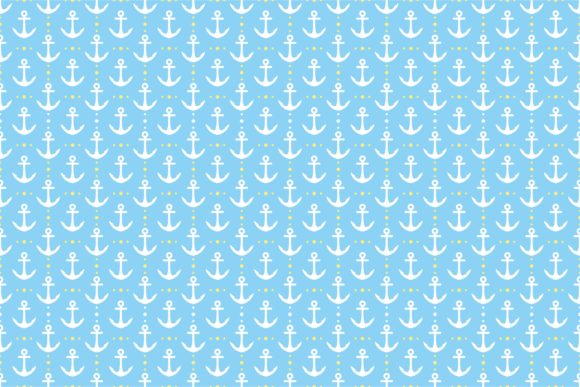
Anchor Doodle Seamless Pattern for Modern Design
If you have browsed design asset libraries recently, you have likely encountered the Anchor Doodle Seamless Pattern. This design element has become a staple for creators who want a nautical yet playful aesthetic without committing to literal or overly themed visuals. Rather than a simple repetition of anchors, these patterns blend hand-drawn doodle styles with seamless tiling, offering a versatile tool for projects ranging from fabric prints to digital backgrounds.
The appeal lies in its balance. An Anchor Doodle Seamless Pattern evokes maritime themes but does so with a light, illustrative touch. The doodle aspect softens the formal symbolism of anchors, making it suitable for casual, coastal, or creative environments. Because it is vector-based, scaling and recoloring are straightforward, allowing you to adapt the same base pattern for different contexts without losing resolution.
Key Characteristics and Strengths
Understanding what sets this pattern apart helps you leverage it effectively. Here are the defining features:
- Seamless tiling: The design repeats without visible edges, so it works for large surfaces like wallpaper or fabric without disruption.
- Doodle aesthetic: Lines are often uneven, playful, or sketch-like, giving a handcrafted feel that contrasts with rigid geometric patterns.
- Colorful palette: Many versions incorporate multiple colors, from classic navy and white to vibrant yellows, corals, and teals, expanding application possibilities.
- Vector format: Typically provided as an Anchor Doodle Seamless Pattern vector illustration, you can scale it infinitely and edit individual elements.
- Nautical but flexible: The anchor motif is recognizable yet abstract enough to pair with other patterns or stand alone.
These characteristics make it a practical choice for projects where you need a repeatable background that adds interest without overpowering content. The seamlessness is particularly valuable for digital use, where visible tile edges can ruin a design.
Practical Applications Across Environments
One reason the Anchor Doodle Seamless Pattern appears in so many contexts is its adaptability. Below are real-world uses grouped by environment:
Personal and Home Decor
For interior design, this pattern works well on accent walls, throw pillows, or duvet covers. If you prefer a coastal theme but want something less literal than striped nautical flags, the doodle style brings warmth. A Seamless Pattern Colorful Design can liven up a child’s room or a beach house without feeling theme-park themed. Because the pattern is seamless, you can order custom wallpaper or fabric knowing the repeat will be smooth.
Professional and Commercial Use
Marketers and business owners use these patterns for branding materials. A boutique hotel or café near the coast might use the Anchor Doodle Seamless Pattern on menus, takeaway cups, or signage. The doodle quality suggests approachability and creativity, which can differentiate a brand from competitors that rely on stock photos. For product packaging, the pattern adds a decorative element that feels intentional rather than generic.
Entrepreneurs selling on platforms like Etsy or Spoonflower can upload their own variations. Because the pattern is abstract and versatile, it appeals to a wide audience, from scrapbookers to textile designers.
Educational and Creative Environments
Teachers and educators can use the pattern for classroom decorations, worksheets, or bulletin boards. The anchor motif ties into lessons about geography, history, or teamwork (as in “anchoring” knowledge). The colorful, doodle style engages younger audiences without distracting from learning content. Freelancers creating resources for teachers often incorporate such patterns to add visual interest to otherwise plain materials.
For hobbyists, the pattern is a starting point for digital art. You can layer it with text, photographs, or other graphics. Because it is a vector illustration, you can extract individual icons or recolored versions for different projects.
Digital and Online Platforms
Web designers and bloggers use these patterns as backgrounds for websites, social media graphics, or email headers. The seamless nature ensures the pattern loads cleanly across devices. For a travel blog or lifestyle site, an Anchor Doodle Seamless Pattern provides a subtle, on-brand backdrop that does not compete with written content. It also works well for Zoom backgrounds, presentation slides, or YouTube video thumbnails, where a distinctive but not busy design is beneficial.
Benefits Related to Usability and Efficiency
Choosing a seamless pattern over a single large image offers practical advantages. First, file size remains manageable because the pattern is tiled algorithmically. When you use an Anchor Doodle Seamless Pattern in software like Adobe Illustrator or Canva, you apply it as a swatch, which reduces memory usage and speeds up rendering. For print applications, you only need a small segment of the design to cover large areas, saving production costs.
The vector format also means you can adjust colors to match existing brand palettes. If your brand uses specific blues and greens, you can recolor the pattern accordingly without losing the doodle charm. This flexibility is especially valuable for marketers who need consistency across multiple touchpoints.
From a user experience perspective, the pattern adds visual texture that can improve engagement. A plain white background may seem sterile, while a busy photo background can be distracting. The Seamless Pattern Colorful Design sits between these extremes—it provides interest but remains readable when used with text overlays. This balance is critical for websites, presentations, or printed materials where clarity matters.
Realistic Examples and Use Cases
Consider a small business owner launching a line of coastal-themed stationery. Using the Anchor Doodle Seamless Pattern on notebook covers, wrapping paper, and thank-you cards creates a cohesive look. The doodle style implies handmade quality, which appeals to customers seeking artisan products. Similarly, a wedding planner might use the pattern on save-the-dates for a beach wedding, pairing it with cursive fonts and natural imagery.
For digital creators, you can incorporate the pattern into Instagram story backgrounds or Facebook ad creatives. The colorful variation works particularly well on social media, where eye-catching visuals are essential. A travel influencer could use it to unify their feed without repeating the same photos.
In educational publishing, a textbook chapter on maritime history might use the pattern for chapter dividers or margin illustrations. The doodle anchor separates sections without breaking the flow of reading, and its seamless nature ensures consistent appearance across pages.
Practical Considerations When Selecting or Using
Not all Anchor Doodle Seamless Pattern assets are equal. Here are points to evaluate before purchase or creation:
- Scale: Check the recommended scale for the intended use. A pattern designed for fabric may appear too large or small on a website. Many vectors allow scaling, but the doodle details should remain clear.
- Color variants: Look for assets that include multiple colorways. A single navy version might not fit every project, but a pack with four or five palettes increases versatility.
- Seamless repetition: Always preview the pattern at a large scale to ensure the tile matches perfectly. Some patterns rely on fading edges, which can produce visible lines.
- File format: For editing, prioritize EPS or SVG files. For direct use, PNG with transparency or JPEG with high resolution works. Confirm licensing terms if you plan commercial use.
- Doodle density: Patterns with many small elements may look cluttered at smaller sizes. If you need the pattern for business cards or thumbnail images, choose a version with bolder, fewer elements.
When implementing, test the pattern against your content. For example, if you use it as a website background, ensure that text contrast remains high. A colorful pattern might require a semi-transparent overlay or a solid footer to maintain readability. On fabric, consider the weave and print method—cotton may absorb ink differently than polyester, affecting color vibrancy.
Final Observations and Recommendations
The Anchor Doodle Seamless Pattern is more than a decorative afterthought. It is a functional design element that supports branding, communication, and aesthetic goals. Whether you are a business owner designing packaging, an educator preparing materials, or a hobbyist creating digital artwork, this pattern offers a reliable way to introduce nautical themes without commitment to realism.
Start by identifying where you need a repeatable background. Then, choose a version of the pattern that complements your existing color scheme and style. Test it in your actual medium—print a sample, place it on a webpage, or sew a small fabric swatch. Adjust scale and color as needed. Because the pattern is designed to be seamless, you can focus on the creative aspects rather than technical headaches.
In a landscape where digital and physical design increasingly overlap, versatile assets like this pattern save time and elevate results. Use it thoughtfully, and it will anchor your projects with both charm and professionalism.