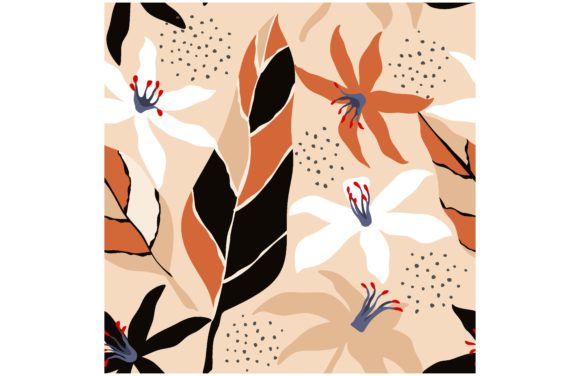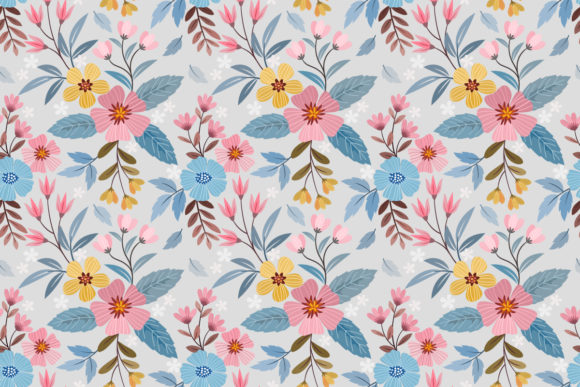
Colorful Hand Draw with Flowers Pattern: A Strategic Tool for Branding, Design, and Product Differentiation
When you encounter a Colorful Hand Draw with Flowers Pattern, the immediate reaction is often visual delight. But for professionals, entrepreneurs, and creators, such a pattern represents far more than decoration. It is a reusable design asset that can shape brand identity, improve customer experience, and streamline production workflows. This article explores how to use this pattern intentionally, what to consider before integrating it into your work, and how to avoid common missteps that dilute its impact. Whether you are launching a textile line, designing packaging, or building a cohesive visual language for your business, understanding the strategic role of a seamless pattern is essential.
What a Colorful Hand Draw with Flowers Pattern Actually Is
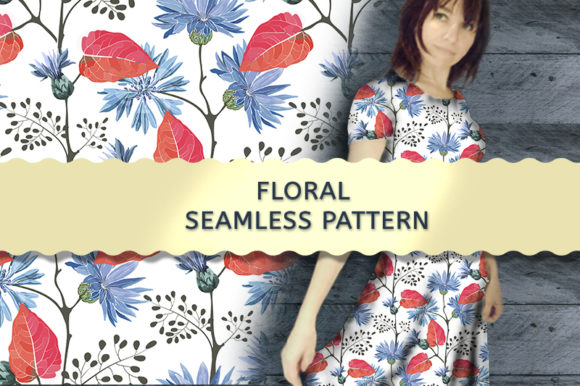
At its core, a Colorful Hand Draw with Flowers Pattern is a digitally rendered, repeatable design that mimics the warmth and irregularity of hand-drawn art. Unlike rigid geometric patterns, hand-drawn florals carry a sense of movement, spontaneity, and organic texture. The pattern you receive typically comes in two formats: a high-resolution JPEG at 5000 x 5000 pixels and an EPS 8 vector file compatible with programs like Affinity Designer and Adobe Illustrator. The JPEG is ideal for digital backgrounds, social media graphics, and print-on-demand previews, while the EPS file allows infinite scaling, color adjustments, and layout modifications without loss of quality. This dual-format delivery means the pattern is not a one-time image but a flexible resource you can adapt across mediums.
Seamless patterns, by definition, tile without visible edges. This technical feature is not merely aesthetic; it enables efficient production for fabric rolls, wallpaper sheets, gift wrap, and large-format backdrops. When you purchase a seamless pattern, you are buying efficiency and consistency. A single file can cover an entire product line, saving hours of manual alignment work and reducing the risk of visual breaks in your final output.
Why Thoughtful Use of a Floral Pattern Supports Strategic Goals
Using a Colorful hand draw flowers seamless pattern without a clear purpose can lead to visual clutter and brand confusion. However, when deployed with intention, the same pattern becomes a lever for several business and creative objectives.
Brand Positioning and Differentiation
Markets saturated with minimalist, geometric, or photographic designs offer an opening for hand-drawn florals. The human touch embedded in hand-drawn lines communicates warmth, authenticity, and craftsmanship. For a small business in home decor, stationery, or apparel, adopting a distinctive floral pattern can differentiate your products from mass-produced alternatives. The pattern becomes a signature element that customers associate with your brand's personality. If your positioning leans toward artisanal, eco-conscious, or emotionally resonant products, a hand-drawn floral pattern reinforces that message without requiring additional copywriting or explanation.
Operational Efficiency in Product Development
From a production standpoint, a seamless pattern reduces decision fatigue. Instead of designing each product surface from scratch, you have a repeatable asset that can be applied to fabric, packaging, wallpaper, and digital backgrounds. This consistency speeds up prototyping and allows you to launch coordinated collections quickly. For example, a single pattern can appear on a throw pillow, a gift box, a notebook cover, and a website hero image—creating a unified visual ecosystem with minimal extra effort. The EPS 8 format ensures that whether you are scaling the pattern for a billboard or a bookmark, the resolution and alignment remain intact.
Customer Experience and Emotional Connection
Patterns influence how people feel in a space or about a product. Florals, especially hand-drawn ones, tend to evoke comfort, nostalgia, and natural beauty. When used on wallpaper, fabric, or packaging, they can transform a functional item into something people want to keep, display, or gift. For retailers and direct-to-consumer brands, this emotional lift can improve perceived value and justify premium pricing. Customers are often willing to pay more for products that "feel special," and a distinctive pattern is one of the most cost-effective ways to create that perception.
Strategic Considerations Before You Use the Pattern
Adopting a Colorful Hand Draw with Flowers Pattern is not purely a creative decision; it requires planning to ensure the pattern serves your goals rather than undermining them.
Audience and Context Alignment
Not every brand or product benefits from a floral pattern. Consider your target audience's preferences, lifestyle, and needs. A hand-drawn floral pattern may resonate well with boutique fashion shoppers, wedding planners, or interior designers seeking organic themes. It may feel out of place in a high-tech, industrial, or corporate B2B context. Before committing to a pattern, create a quick alignment matrix: list your core customer segments, their aesthetic expectations, and the emotional tone you want to project. If a floral pattern maps cleanly to those elements, proceed with confidence. If it feels forced, explore other pattern styles first.
Color Palette and Scale Decisions
The pattern you choose comes with its own color scheme and density. While the EPS file allows color editing, that process takes time and design skill. Evaluate whether the existing palette complements your brand colors or requires modification. Similarly, consider scale: the same pattern at 100% size may feel busy on a small notebook but perfect on a large fabric drape. Test the pattern at different scales before finalizing production. A pattern that looks balanced in a digital preview may become overwhelming when printed at full size on wallpaper. Conversely, a pattern designed for large surfaces may lose its detail when reduced for a phone case.
Licensing and Usage Boundaries
Even though you purchase a pattern file, usage rights vary by seller. Some files are for personal use only, while others extend to commercial production. If you plan to sell products featuring the pattern—whether fabric, wallpaper, or gift wrap—verify that your license permits commercial use. The article does not specify licensing terms, so you must check the product description or contact the seller. Using a pattern without proper rights can lead to legal disputes, takedown notices, or financial penalties that far outweigh the initial savings.
Practical Applications Across Industries and Use Cases
The versatility of a Colorful hand draw flowers seamless pattern becomes apparent when you map it to real-world projects. Below are common applications and planning tips for each.
Fabric and Textile Design
For fashion designers, upholstery creators, or fabric retailers, a seamless pattern eliminates the headache of matching repeats. The EPS file allows you to adjust colors to match seasonal trends or fabric dye lots. When planning a fabric collection, use the pattern as a base and layer it with solid colors or complementary motifs. Consider using the pattern on a single garment style—like a scarf or a dress lining—as a signature piece rather than covering an entire line. This approach creates a focal product without overwhelming your catalog.
Wallpaper and Interior Backdrops
Interior designers and decor brands can use the pattern as a wallpaper accent wall, a removable mural, or a backdrop for staging photos. The 5000 x 5000 pixel JPEG ensures crisp printing at residential scales. For custom wallpaper projects, order a small sample roll first to confirm color accuracy and pattern proportion in the actual lighting conditions of the room. Hand-drawn florals work particularly well in bedrooms, reading nooks, or retail changing rooms where a calm, inviting atmosphere is desired.
Gift Wrapping and Packaging
E-commerce businesses, especially those in the gift or stationery space, can differentiate their packaging by using the pattern on wrapping paper, tissue paper, or box liners. Consistent packaging patterns improve unboxing experiences and encourage social media sharing. Pair the pattern with a simple logo sticker in a contrasting color so the brand remains visible without competing with the design. For seasonal campaigns, you can modify the EPS file to shift the color palette toward holiday tones while keeping the hand-drawn floral structure intact.
Digital Backgrounds and Social Media
Content creators, bloggers, and marketers can use the pattern as a background for product photos, video thumbnails, or website sections. The high-resolution JPEG supports retina displays and large monitor formats. To avoid visual fatigue, use the pattern sparingly—on a single hero section, as a subtle watermark, or as a repeating background for a specific category page. When the pattern appears consistently across your digital assets, it reinforces brand recognition without demanding attention away from your core content.
Event and Retail Display
For event planners or retail store owners, the pattern can be printed as a tablecloth, banner, or backdrop for pop-up displays. Because the file is seamless, you can cover large surfaces without visible lines. Measure the display area beforehand and test the pattern at the intended print size. A pattern that looks charming on a small screen may appear chaotic when scaled to a six-foot backdrop. In such cases, consider using the pattern as a border or accent rather than a full coverage.
Possible Risks of Using a Pattern Without Clear Goals
Even a beautiful Colorful Hand Draw with Flowers Pattern can become a liability if applied thoughtlessly. Understanding these risks helps you make more deliberate decisions.
- Visual noise and brand dilution: Using the pattern on every surface can overwhelm customers and weaken brand identity. A pattern should enhance, not dominate. Set clear boundaries for where the pattern appears and where it does not.
- Incompatibility with production methods: Some printing techniques handle seamless patterns poorly, especially on textured fabrics or uneven surfaces. Always request a proof or sample before large production runs. The EPS format gives you flexibility, but your printer's capabilities may limit what is achievable.
- Overexposure and trend fatigue: If you use the same pattern across every product, channel, and season, customers may become desensitized to its appeal. Consider rotating patterns periodically or using this pattern as a seasonal signature rather than a permanent fixture.
- Misaligned audience expectations: A hand-drawn floral pattern may signal femininity, gentleness, or leisure. If your brand values include toughness, precision, or innovation, the pattern could send mixed signals. Evaluate whether the pattern's emotional tone matches your strategic positioning.
- Legal and licensing gaps: As mentioned earlier, unknowingly using a pattern beyond its license can result in legal action. Document your usage rights before launching any product.
How to Use Colorful Hand Draw with Flowers Pattern Intentionally
Intention separates effective design from decoration. Here is a practical framework to ensure your pattern use is strategic rather than random.
- Define the primary goal. Is the pattern meant to attract attention, create a mood, unify a collection, or support a product's function? Write down one clear goal before you open the file.
- Select one application as a test. Instead of rolling out the pattern everywhere, choose a single product or channel. Apply it, measure the response, and learn from the results. A test reduces risk and gives you data to inform wider adoption.
- Adjust scale and color for context. Use the EPS file to modify the pattern's color palette to match your existing brand guidelines. Test the pattern at different sizes and on different materials to find the version that best serves your goal.
- Set boundaries for usage. Decide in advance where the pattern will appear and where it will not. For example, use it on product packaging but not on your website background. Boundaries prevent overuse and protect brand clarity.
- Document outcomes and iterate. Track metrics like customer feedback, engagement, conversion rates, or production efficiency before and after introducing the pattern. Use that information to decide whether to expand, modify, or retire the pattern in future projects.
Long-Term Value of a Thoughtfully Applied Pattern
When a Colorful Hand Draw with Flowers Pattern is selected and deployed with strategic intent, it can become a lasting asset. Unlike trend-driven designs that fade within a season, hand-drawn florals have a timeless quality that allows them to remain relevant across years. The seamless technical format means you can adapt the pattern to new products, platforms, and scales without reinvention. For small business owners and creators operating with limited design resources, this longevity translates into a strong return on investment. One pattern file can generate dozens of products, each carrying a consistent visual signature that builds brand equity over time.
Moreover, a pattern that resonates with customers can become a talking point. People notice when a brand puts thought into its visual details. A carefully placed floral pattern on a fabric swatch, a wallpaper sample, or a gift box signals that you care about quality and experience. In competitive markets, that perception can be the difference between a one-time purchase and a loyal customer.
Ultimately, the value of this pattern is not in the file itself but in how you use it. With clear goals, careful planning, and consistent execution, a Colorful hand draw flowers seamless pattern can support your branding, streamline your production, and improve the way customers experience your products. Open the EPS file, adjust the colors to your needs, and start with a single application. Let the results guide your next move.