Mandala Pattern Grey Star Flowers: A Versatile Design Element for Creatives and Entrepreneurs
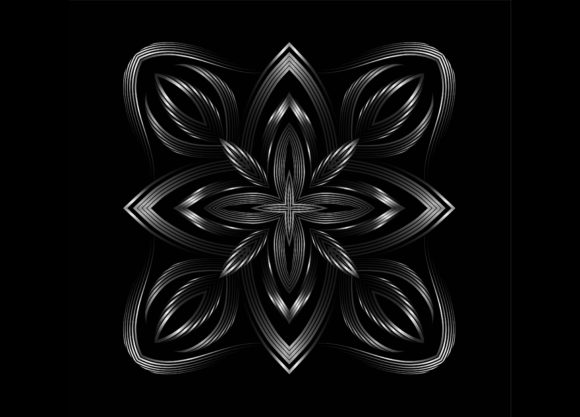
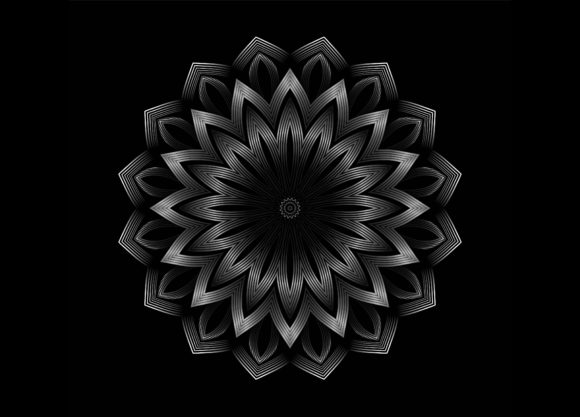
If you have come across the term Mandala Pattern Grey Star Flowers, you might already sense that this design carries more depth than a simple decorative motif. At first glance, it appears to be a symmetrical arrangement of star-like floral shapes rendered in soft grey tones. But what makes this particular mandala pattern stand out is its adaptability. Whether you are designing a wedding invitation, sketching a henna concept, formatting a tablecloth repeat, or setting up a cut file for your craft machine, the mandala pattern grey star flowers vector file offers a reliable foundation. However, many people rush into using such a file without fully understanding its capabilities or limitations. This article walks through common missteps and offers practical corrections so you can make the most of this design asset.
What the Mandala Pattern Grey Star Flowers Actually Offers
The typical file package includes a JPEG file for quick previews and an AI file for scalable vector editing. This combination gives you both a ready-to-print raster version and an editable, infinitely scalable vector source. The pattern itself centres on grey star-shaped floral forms arranged in a circular mandala layout. The colour palette stays in the neutral grey range, which makes it suitable for projects where you want a subtle, elegant backdrop or a monochromatic accent. Because it is a vector file, you can resize it without losing quality, recolor individual elements, or extract specific motifs for different uses.
One misunderstanding that frequently arises is that the JPEG alone is sufficient for professional work. While a high-resolution JPEG can serve for quick mockups or low-stakes prints, it lacks the flexibility of the AI file. If you plan to scale the pattern up for a banner, adjust the colours to match a brand palette, or isolate a single flower for a logo detail, you will need the vector file. The AI file preserves the original paths, layers, and editable shapes. Without it, you are locked into a static image that cannot adapt to different formats or sizes without pixelation or colour shifting.
Common Mistakes When Using a Mandala Vector File
Even experienced designers sometimes overlook critical steps when working with a Mandala Pattern Grey Star Flowers file. Here are the most frequent issues and how to avoid them.
Mistake 1: Ignoring the File Format Requirements for Your Project
Many people download the file and open the JPEG in a word processor or basic image editor, then wonder why the edges look jagged or why they cannot change the colour. The JPEG is a flattened image. It works fine for digital display or low-resolution printing, but it will not scale cleanly. If you need to print on fabric, create a large wall decal, or use the pattern as a repeating background for a website, the JPEG will disappoint.
How to correct this: Always open the AI file in Adobe Illustrator or a compatible vector editor like Affinity Designer or Inkscape. From there, you can export to any format you need—PDF for print, SVG for web, EPS for cutting machines, or PNG for digital use. Before starting your project, confirm which output format your workflow requires. If you are a hobbyist who only uses Canva or similar tools, you may need to convert the AI file to a PNG or SVG first. Do not assume the JPEG will cover all your needs.
Mistake 2: Overlooking the Need to Recolour for Brand or Theme Cohesion
The grey tones in mandala pattern grey star flowers are elegant, but they may not fit every project. A wedding suite with a blush-and-gold palette, a children’s event with bright colours, or a corporate presentation with specific brand colours all require customisation. Some users simply drop the grey pattern into their design and call it done, missing an opportunity to align the visual with the overall theme.
How to correct this: Use the AI file to select individual elements or the entire pattern and apply a new colour. Because the file is vector-based, you can change the fill and stroke colours in seconds. For a uniform look, use a global colour swatch so that any adjustment updates every instance. If you are printing for a wedding, consider a metallic gold or soft ivory instead of grey. For a henna design, a deep brown or burgundy might feel more authentic. Test colour variations on a small section before applying them to the whole pattern.
Mistake 3: Not Checking the Pattern Repeat for Continuous Surfaces
Many mandala files are designed as single circular motifs, not as seamless repeating tiles. If you plan to cover a tablecloth, a roll of wrapping paper, or a fabric length, you need a pattern that tiles without visible seams. Some users stretch the single motif across a large area, which results in awkward gaps or overlapping lines.
How to correct this: Open the AI file and inspect whether the design is already set up as a repeating tile or if it is a standalone motif. If it is a single mandala, you can manually create a seamless pattern in Illustrator using the Pattern Options panel. Duplicate the motif, align it symmetrically, and define a tile that repeats cleanly. For cutting machines like Cricut or Silhouette, you may need to adjust the placement so that the pattern fits within the cutting mat without cropping the design awkwardly. Always run a test print or test cut on plain paper before committing to final material.
Overlooked Details That Affect Quality and Usability
Beyond the obvious file-handling issues, there are finer points that separate a polished result from a mediocre one. These details often trip up both beginners and busy professionals.
Line Weight and Cut Paths
If you are using the Mandala Pattern Grey Star Flowers for a cutting machine, the line weight of the vector paths matters. A design with very thin lines may tear when cut from cardstock or vinyl. Conversely, thick lines may look clunky when scaled down for a small tag or sticker.
How to correct this: Before cutting, adjust the stroke weight in your vector software. For paper cutting, a stroke of 0.5–1.0 pt generally works well. For fabric or heat transfer vinyl, you may want slightly thicker lines. Also check that all paths are closed. Open paths can cause the cutting machine to skip sections or produce incomplete shapes. Use the “Join” command to close any gaps. If you are not experienced with vector editing, search for a quick tutorial on preparing SVG files for Cricut or Brother ScanNCut.
Resolution and DPI for Print Projects
Even though the AI file is vector-based, you still need to set the correct DPI when exporting for print. Some users export at 72 DPI, which is fine for screens but looks blurry on paper. Others forget to embed fonts or flatten transparency, leading to printing errors.
How to correct this: When exporting to PDF or TIFF for print, set the resolution to 300 DPI at the final output size. If you are printing on fabric or canvas, you may need to consult your printer’s specifications. Keep the file in CMYK colour mode for professional printing, and convert to RGB only for digital use. Test a small sample on the actual material before running a large batch.
Practical Advice for Different Use Cases
The mandala pattern grey star flowers vector file can serve many purposes, but each use case demands slightly different preparation. Let me give you realistic examples for common scenarios.
Wedding and Event Stationery
For invites, place cards, and programs, you will likely want to scale the mandala to fit standard card sizes. Open the AI file and place the pattern on an artboard sized to your card dimension. If the mandala is too large, scale it down proportionally. For a cohesive look, use the pattern as a subtle background watermark behind the text. Keep the grey tone light enough that black or dark text remains readable. If you plan to print on coloured cardstock, adjust the grey to complement the paper colour—a warm grey on ivory paper or a cool grey on silver paper works well.
Henna and Body Art Stencils
Henna artists often use pre-drawn stencils to guide their application. The Mandala Pattern Grey Star Flowers can be converted into a stencil outline. Remove the fill from the vector shapes and leave only the strokes. Print the outline onto temporary tattoo paper or cut it from adhesive vinyl for a reusable stencil. Test the size on your own hand first to ensure the pattern fits the intended body area. The grey star flowers lend themselves nicely to hand and forearm designs because the floral elements feel organic while the mandala structure provides symmetry.
Knits and Embroidery
If you are knitting a blanket or embroidering a pillowcase, you need a pattern that translates well into stitches. For knitting, simplify the design by reducing the number of fine details. Use the AI file to create a chart or a simplified outline. For embroidery, you may want to break the pattern into separate elements and stitch them in different colours. The grey base can serve as a guide for thread tones. Use a stabiliser material behind the fabric to prevent puckering, and test the design on a scrap piece first.
Tablecloths and Home Textiles
For a tablecloth or curtain, you need a repeat that flows naturally across the fabric. As mentioned, check whether the file is a seamless tile. If not, create a tile in Illustrator or ask a print service to handle the repeat. When printing on fabric, be aware that the grey colour may appear differently on cotton versus polyester. Request a swatch sample before placing a full order. If you are screen printing, separate the design into colour layers. The grey star flowers may work as a single-colour print if you choose a contrasting fabric shade.
What to Check Before Committing to a Purchase or Download
Before you buy or download a Mandala Pattern Grey Star Flowers file, verify a few key points to avoid disappointment later.
- File contents: Confirm that the package includes both the AI and JPEG as advertised. Some listings only provide a single format. Read the product description carefully.
- Licensing terms: Check whether the file is for personal use only or commercial use is allowed. If you plan to sell items made with the pattern, you need a commercial license.
- Editability: The AI file should be fully editable. Open it in your software to check that layers are intact and no elements are locked or flattened. If the file was created in an older version of Illustrator, you may need to update it.
- Scale and proportion: Preview the design at different sizes. Some mandala patterns look elegant at large scale but become too busy when reduced. Test the file at the sizes you actually intend to use.
- Customer support: If anything is unclear, reach out to the seller or creator. Reputable providers are happy to answer questions about file compatibility, colour, or usage limitations.
Making Better Choices for Your Project
The mandala pattern grey star flowers vector file is a versatile asset, but like any tool, it works best when you understand its strengths and limitations. By taking the time to check file formats, adjust colours, prepare seamless repeats, and test cut paths, you avoid the most common errors that lead to wasted materials, blurred prints, or mismatched visuals. Whether you are a professional designer, a small business owner, or a hobbyist, a few minutes of upfront preparation can turn a simple mandala pattern into a polished, professional result. Start by opening that AI file and exploring what the layers contain. You may discover possibilities you hadn’t considered.