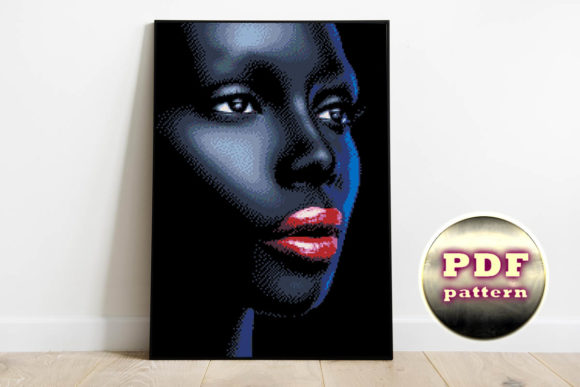
African Woman Cross Stitch Pattern – Art: A Detailed Look at This Distinctive Embroidery Design
Cross stitch has long been a medium for personal expression, cultural storytelling, and home decoration. Among the many patterns available today, the African Woman Cross Stitch Pattern - Art stands out as a design that blends portraiture, textile craft, and cultural heritage into a single project. Whether you are new to hand embroidery or an experienced stitcher looking for something beyond floral samplers and geometric borders, this pattern offers a compelling option worth examining closely.
This article provides a practical, comparison-oriented look at the African Woman Cross Stitch Pattern - Art. We will explore what makes this pattern distinct, how it compares with other cross stitch categories, where it fits best, and what tradeoffs you should consider before choosing it for your next project.
What Defines the African Woman Cross Stitch Pattern – Art?
At its core, the African Woman Cross Stitch Pattern - Art is a counted cross stitch design that depicts a stylized portrait of an African woman. The pattern is crafted for Aida 14 count fabric in white, with a stitch count of 150 stitches wide by 225 stitches high. On 14 count fabric, this translates to a finished size of approximately 27.21 cm wide by 40.82 cm high — roughly 10.7 by 16.1 inches. This is a vertical, portrait-oriented piece that commands attention on a wall or within a display frame.
The pattern uses 18 colors and is offered in two formats: color blocks with symbols and black and white symbols. The color-block version is especially helpful for visual tracking, while the black-and-white symbol chart is a classic format that many stitchers prefer for its clarity when working under good lighting. Having both options gives you flexibility depending on how you like to read your charts.
What makes this pattern distinct is not just the subject matter but the way it treats skin tones, facial features, textile patterns, and adornments. Unlike many generic portrait patterns, this design is built around cultural specificity. The palette of 18 colors allows for nuanced shading in the skin, hair, clothing, and background elements, giving the finished piece a painterly quality that goes beyond simple outline stitching.
This is not a beginner-level pattern in the sense of a small bookmark or a monochrome icon. The stitch count of 150 by 225 means thousands of individual crosses, and the portrait nature demands careful attention to placement and color changes. However, the large count also means the final piece has substantial visual impact and detail that smaller patterns cannot achieve.
How Does This Pattern Compare with Other Cross Stitch Categories?
To understand where the African Woman Cross Stitch Pattern - Art fits, it helps to place it alongside other common cross stitch categories. Each category has its own strengths, limitations, and ideal use cases.
Versus Floral and Nature Patterns
Floral and nature patterns are the most common cross stitch designs available. They are often symmetrical, use repeating motifs, and rely on established color palettes that are easy to follow. A floral pattern on 14 count Aida might use 10 to 20 colors and cover a similar stitch count. The tradeoff is that while floral patterns are forgiving — even a slightly misplaced stitch rarely ruins the overall look — a portrait pattern like the African Woman Cross Stitch Pattern - Art demands higher precision. A misplaced stitch in a facial feature can alter the expression or likeness.
However, the reward is a piece that feels personal and representational rather than decorative in a generic sense. If your goal is to create art that tells a story or reflects identity, a portrait pattern offers emotional resonance that floral designs typically do not.
Versus Geometric and Mandala Patterns
Geometric and mandala patterns are highly structured, often using repeated radial symmetry. They are excellent for practicing consistency and creating modern, boho-style decor. These patterns often use fewer colors and rely on contrast rather than shading. The African Woman Cross Stitch Pattern - Art, by contrast, uses 18 colors to build depth. The shading in skin tones and fabric patterns requires you to switch between similar hues frequently, which is a different skill set than following a repetitive geometric chart.
If you enjoy the meditative rhythm of repeating blocks of color, geometric patterns may feel more relaxing. If you prefer the challenge of blending and modeling a form, the African Woman pattern offers that complexity in a rewarding way.
Versus Sampler and Alphabet Patterns
Sampler patterns often combine letters, numbers, small motifs, and borders. They are historically rooted in teaching stitching skills and documenting family information. The African Woman Cross Stitch Pattern - Art is the opposite: it is a single, cohesive image rather than a collection of elements. There is no text, no border, no separation into multiple small scenes. This makes it a more unified decorative piece, suitable for framing as standalone wall art.
Samplers are often stitched on larger fabric counts like 16 or 18 for fine lettering, whereas this pattern is designed for 14 count Aida, which gives a larger, bolder stitch appearance that suits the portrait's scale.
Strengths
- Cultural representation: This pattern fills a gap in the cross stitch market where portraits of people of color are still relatively uncommon compared to Eurocentric subjects. For stitchers looking to create art that reflects their heritage, community, or personal aesthetic, this design offers a meaningful option.
- Two chart formats: Having both color blocks with symbols and black-and-white symbols allows you to choose based on your working style. Color blocks are excellent for quick visual scanning, while black-and-white charts are easier to photocopy, enlarge, or mark up without color distortion.
- Manageable color count: 18 colors is a moderate palette for a portrait of this size. Many photorealistic cross stitch patterns require 50 or more colors. The limited palette here keeps thread management simpler and reduces the cost of purchasing many different floss colors.
- Substantial finished size: The 27 by 41 cm result is large enough to be a focal point in a room, but not so large that it becomes unwieldy to frame or store during stitching.
Tradeoffs and Limitations
- Not a quick stitch: With over 33,000 individual stitches (150 x 225), this project will take weeks or months depending on your stitching speed and available time. If you are looking for a weekend project, this is not it.
- Precision required: Portrait stitching leaves little room for error. A miscount in the face area can distort the features. You may need to use pattern-keeping tools such as highlighters, magnetic boards, or digital apps to track your progress carefully.
- Fabric count limitation: The pattern is designed specifically for 14 count Aida. While you could adapt it to 16 or 18 count fabric by recalculating the dimensions, the chart is optimized for 14 count. If you prefer finer stitches or smaller finished dimensions, you would need to adjust the pattern yourself, which adds complexity.
- Limited color palette for realism: 18 colors is enough for a stylized portrait, but if you are hoping for photorealistic skin tones or intricate fabric textures, you may find the palette limiting. The design leans toward a graphic, blocky aesthetic rather than ultra-realism.
When Is This Pattern the Right Choice?
The African Woman Cross Stitch Pattern - Art is a strong choice when you want to create a piece of hand embroidery that functions as ethnic decor in your home. If you are decorating a space that celebrates African heritage, Black artistry, or global textile traditions, this pattern fits naturally. It works well in living rooms, bedrooms, home offices, or community spaces where visual representation matters.
This pattern is also a good fit if you have some experience with counted cross stitch and are ready to move beyond simple motifs. Stitchers who have completed a few small to medium projects and want to tackle a portrait without jumping into a massive, multi-page pattern will find this size manageable. The 18-color palette keeps thread changes frequent enough to stay interesting but not overwhelming.
If you are someone who values the process as much as the finished piece, the African Woman pattern offers a project that feels substantial. The act of watching a face emerge from a grid of crosses over weeks of stitching is deeply satisfying and meditative.
When Might You Need a Different Option?
If your primary goal is to complete a project quickly — perhaps for a gift or a seasonal decoration — this pattern may be too time-intensive. In that case, a smaller pattern with fewer stitches and fewer colors would serve you better. A 50 by 70 stitch design with 8 to 10 colors can be finished in a few evenings and still give you a beautiful result.
If you prefer highly detailed, photorealistic stitching, you may want a pattern with 40 or more colors that allows for smoother gradients. The African Woman Cross Stitch Pattern - Art is stylized by design, not photorealistic. Its charm lies in its graphic quality and bold color blocks, not in fine shading.
If you are stitching for a child's room or a very small space, the 27 by 41 cm finished size may be larger than ideal. A pattern with a smaller stitch count, such as 100 by 140, would produce a piece around 18 by 25 cm on 14 count fabric, which fits better in tight spaces.
Finally, if you prefer stitching on evenweave or linen rather than Aida, note that this pattern is designed for 14 count Aida. While you could adapt it, the chart's block construction is most natural on Aida, where each cross aligns perfectly with the fabric grid. Linen and evenweave require stitching over two threads, which can change the dimensions and feel of the project.
Practical Considerations Before You Start
Before purchasing the African Woman Cross Stitch Pattern - Art, think about a few practical factors:
- Fabric preparation: A 14 count white Aida piece should be cut at least 10-15 cm larger than the finished design on each side to allow for framing and handling. You will need a piece roughly 50 by 65 cm to start comfortably.
- Thread organization: With 18 colors, a thread organizer or bobbin system will save you time and frustration. Label each color by the symbol used in the chart.
- Lighting and magnification: Portrait stitching on 14 count Aida is easier with good task lighting and, if your eyes need it, a magnifying lamp or stitching glasses. The symbols on the chart can be small, especially in the black-and-white version.
- Framing plan: Think about how you will frame the finished piece. The vertical orientation and substantial size make it ideal for a standard 30 by 45 cm or 35 by 50 cm frame. Consider consulting a custom framer for best results.
How This Pattern Fits into the Broader Hand Embroidery Landscape
Hand embroidery is experiencing a resurgence among adults aged 20 to 50 who are looking for analog hobbies that reduce screen time, provide a sense of accomplishment, and produce decor that reflects personal values. The African Woman Cross Stitch Pattern - Art aligns with this trend because it offers a project that is both technically engaging and culturally meaningful.
Compared to other needle arts like crewel work, blackwork, or surface embroidery, cross stitch is the most accessible in terms of technique — every stitch is a simple X. Yet the range of complexity is vast. This pattern sits in the middle of that range: accessible to anyone who can count and make a cross, but challenging enough to keep an experienced stitcher engaged.
In the broader context of home decor, this pattern competes indirectly with printed art, canvas paintings, and digital prints. The difference is that hand-stitched pieces carry a tactile authenticity that mass-produced decor cannot replicate. The time invested in stitching also gives the piece personal meaning, whether you stitch it yourself or receive it as a gift from someone who stitched it for you.
Final Thoughts on Choosing the African Woman Cross Stitch Pattern – Art
Selecting a cross stitch pattern is a personal decision that depends on your skill level, available time, aesthetic preferences, and the story you want your finished piece to tell. The African Woman Cross Stitch Pattern - Art offers a distinctive combination of cultural representation, moderate complexity, and substantial visual presence. It is not the fastest project or the most detailed portrait pattern on the market, but it occupies a valuable niche for stitchers who want to create meaningful, representational art with their hands.
If you value a pattern that respects your time without being overly simplified, that provides clear charting in two formats, and that results in a finished piece suitable for framing as African decor or Black art wall decor, this pattern deserves serious consideration. Compare it with your own goals, your stitching habits, and the space where the finished piece will live. With those factors clear, you can decide with confidence whether this pattern is the right next project for you.